
How to Navigate the Greek Ferries: 15 Things I Wish I Knew Before Island Hopping
what it really means to be prepared
One of the things I love most about traveling through Greece is that every ferry ride feels like part of the adventure. Instead of simply getting from one destination to another, you're sailing between islands, watching the coastline disappear behind you while a completely new landscape comes into view.
That said, the Greek ferry system is definitely different than what many travelers expect, especially if you're visiting Greece for the first time. It isn't difficult once you understand how it works, but there are enough little nuances that being prepared can make your travel days much smoother and far less stressful.
I hope that this blog post helps you with to some degree!
Having sent clients to Greece on a regular basis, I was confident in how to book tickets, plan routes, and prepare them for travel.
Or so I thought.
Now that I've been on the Greek Island ferries myself, I have a much better understanding of the process and what it really means to be prepared for traveling via ferries in Greece.
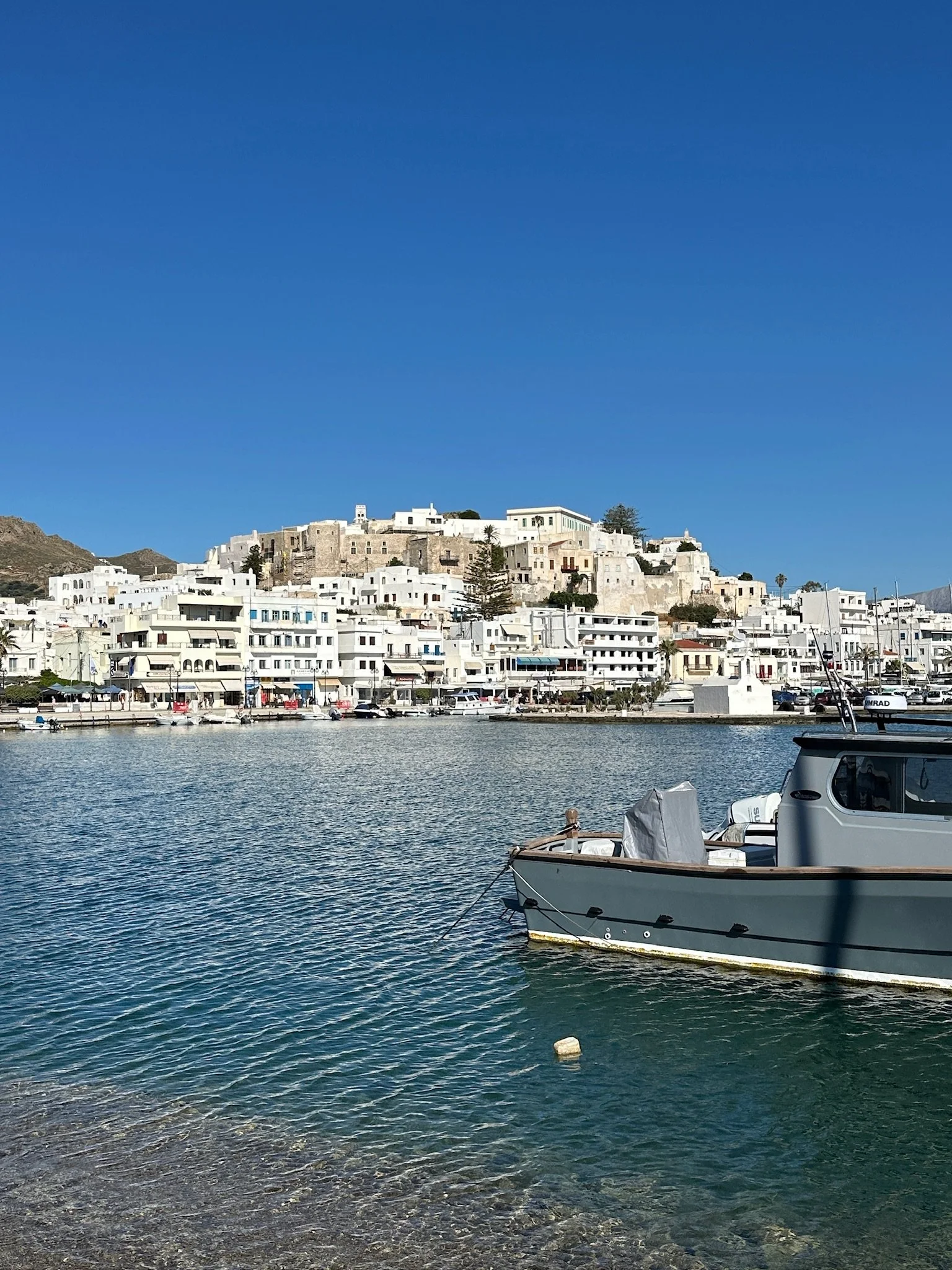
Our first ferry ride was to Naxos from Paros. This beautiful island, with mountains, white buildings and quaint villages is certainly worth a visit.
what I wish I knew about ferries in greece
Here are the things I wish I knew and will tell all my clients going forward.
Timing is everything. Get there before the scheduled ferry time, but not too early. Ferries often run late, and on most islands you'll likely be standing in the sun waiting. Arrive 30 minutes before departure, max.
Sun protection is a must. Wear sunscreen and pack a hat and a personal fan if you're traveling in the summer.
Don't expect much structure. The waiting areas are bare bones: no electronic signs, no designated staff. Just whiteboards and the occasional announcement from a guy yelling. Mostly you're asking other travelers to confirm you're in the right line. Arriving early might get you a seat on a concrete block. Arriving late means you're standing until you board.
No bathrooms at the ports. They can be found in the port towns, but prepare to have a few euros on you to pay to use them.
Boarding is a bit of a shuffle. Everyone congregates in one area, then sometimes you get told to stand in another holding area until enough people get off so you can start going on. There's no order for boarding. Everyone gets on in one giant line as those coming off the boat are exiting.
Your e-ticket can wait. Have it ready, but you won't need it until you get on the boat. Just when you think you are making progress, the line will slow as tickets are checked. Digital tickets are the easiest to use.
Luggage has its own rules. Traveling with bags? There are luggage racks on the boats, so be sure to drop yours off there, especially if they're larger than a carry-on. There's very little room for them in the passenger decks. Depending on the ferry, luggage racks are either in the car parking area or in a designated area before heading up to seating. Some carriers charge for luggage, some don't. Also, you’ll see signs for the port stops but no one really pays attention to them. It’s ok to put your bags where there is space.
A reserved seat is worth it. It will be waiting for you, which alleviates a lot of stress and hassle. Higher level seats offer more room, more exclusive dining options, and a higher level of service.
Respect the seat assignments. Do not take someone else's seat. Seat reservations are highly respected on the ferries.
Pack snacks. While there are food options on board, you are allowed to bring your own food on board to enjoy. A good idea for longer trips or when traveling with kids. Games can help make the time go by faster too.
Wifi will cost you. It's not free on most boats. You have to pay approximately €5 for a code, and it's one user per code.
Know your carrier. There are two main lines in the Cycladic Islands: Blue Star Ferries and SeaJets. Blue Star ferries are bigger, offer less direct routes, and go slower, making them better for rougher seas. SeaJets are high-speed ferries, but you'll feel the waves more if seas are rough. In our experience, SeaJets was always late, and Blue Star was more timely.
Ionian Islands have their own quirks. Different carriers serve that region, and not all ferries run daily. Check schedules before planning your departure days.
Seasonality is real. Ferries do not run year round.
Have your transportation pre-arranged. This will make you life so much easier getting off the ferry. Looking for a driver will ensure you are on your way quickly, waiting in the taxi queue makes a long travel day even longer!
A bonus tip: Depending on weather and season, the ocean can be rough, creating large swells. If you are sensitive to motion and get seasick easily, be sure to pack motion-sickness meds or patches. Taking them/applying them before you board can offer much relief. Be sure to use the non-drowsy formulas, so you are not too groggy when you land at your next destination.
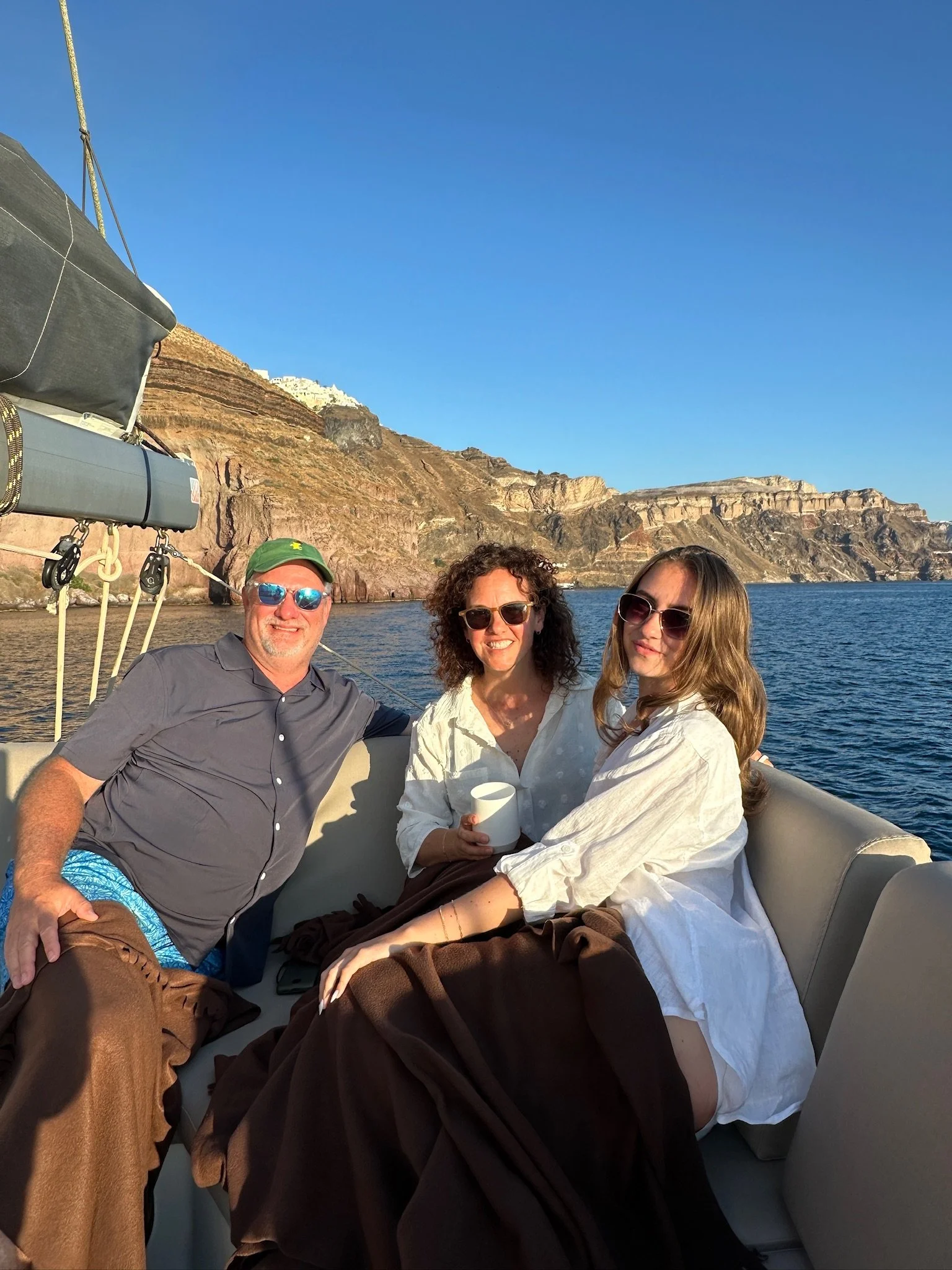
Not exactly a ferry but this is my family and I on yacht, no matter how you experience Greece, getting on this water is the way to see all sides of this beautiful country.
Final Thoughts
As I mentioned, now that I've experienced the ferries myself, I know exactly what I'll be sharing with my clients before they travel. A little planning—booking the right ferry, reserving seats, arriving at the right time, and arranging transportation in advance—can make all the difference.
Once you know what to expect, you can stop worrying about logistics and simply enjoy one of the best parts of Greek island hopping.
If you're planning your first trip to Greece and aren't sure which ferry routes make the most sense or how to coordinate hotels, transfers, and island combinations, I'd love to help. That's exactly where working with a travel advisor takes the guesswork out of planning and lets you focus on enjoying the journey.
Happy travels, friends!
Celebrate and Explore the Ferries in Greece
